Sunday, November 30, 2014

Two Controversial Mortgage Products Agents Should Know About

Two Controversial Mortgage Products Agents Should Know About

Today we are pleased to welcome back Nikki Buckelew as our guest blogger.  Nikki is the Founder and CEO of the Seniors Real Estate Institute.
We already know from NAR that 1 in 4 home sales in 2012 involved a seller over the age of 65. It’s also no secret that the aging population is growing rapidly, creating the commonly referred to “Senior Tsunami.”
With this massive demographic shift and impending related changes in the real estate market, agents have little choice but to expand their knowledge base in order to better serve this aging clientele and the buyers of their homes.

Reverse Mortgages

There seems to be a lot of curiosity (and skepticism) these days around the reverse mortgage products on the market and whether or not agents should familiarize themselves with them.
Of course, we have all seen the infomercials featuring Fred Thompson, Henry Winkler, and others touting the many virtues of the Reverse Mortgage for older homeowners, but why should real estate professionals learn about them?
  1. Not only can seniors over the age of 62 use a reverse mortgage to access the equity in their current residence, in most U.S. states, they can also use the reverse mortgage to purchase a new home. This presents savvy agents specializing in the seniors’ niche with a unique value proposition and tool to list and sell more homes.
  2. As older adults with current reverse mortgages (many now in their 80’s and 90’s) are taking advantage of the up-tick in the market and liquidating their primary residence in search of senior living communities, their agent will be looked upon as their guide and expected to assist in navigating the reverse mortgage payoff.
  3. Because many older adults choose to age-in-place as long as they can, they often use reverse mortgages to make necessary home modifications. While some agents have a tendency to fall short at follow up during the sometimes extended sales cycle, those who introduce their senior adult clients to the reverse mortgage product are often appreciated and thus called upon first when it is time for the homeowner to make a move.

FHA 203K Loans

This loan is one that a lot of agents we talk to seem to avoid. Maybe it’s because these loans can require a bit more effort to process, or it could be because they have just not taken the time to research the benefits of using them.
Here are a few reasons why agents may want to pay attention to this otherwise obscure FHA offering in the coming year.
  1. As our population ages and more entry-level homes hit the market, needing repair and updating, this loan is only going to increase in popularity.
  2. Because first time homebuyers often need to use the more affordable FHA loan products to purchase a home; older homes, needing repairs and updating, are filtered out of the home search.  Agents familiar with the FHA 203K can increase the pool of available listings for entry-level buyers.
  3. Senior home sellers are more apt to choose the “as-is” listing option instead of making costly foundation, roof, wiring, or mechanical repairs. By promoting the FHA 203K loan option to qualified buyers, agents increase their pool of potential buyers for such homes.
Reverse mortgages and FHA 203K loans are just like any other financial product: they are neither good nor bad. Their use depends upon the market and each client’s unique circumstances.
By becoming familiar with the market and the best uses for each type of loan, savvy agents can access an otherwise untapped market and carve out a niche that adds sales to their bottom line.
Be sure to consult with your local real estate broker or mortgage lender about any questions you may have concerning reverse mortgages and FHA 203K loans.

Historic Mortgage Rates by Decade

Historic Mortgage Rates by DecadeHistoric Mortgage Rates by Decade [INFOGRAPHIC] | Simplifying The Market

Growth of Hispanic Population in the US

Growth of Hispanic Population in the USGrowth of Hispanic Population in the US | Simplifying The Market

NAR’s Existing Home Sales Report

NAR’s Existing Home Sales ReportNAR's Existing Home Sales Report | Simplifying The Market

Single Women & Homeownership

Single Women & HomeownershipSingle Women & Homeownership [INFOGRAPHIC] | Simplifying The Market

Think You Should FSBO? Think Again

Think You Should FSBO? Think AgainThink You Should FSBO? Think Again [INFOGRAPHIC] | Simplifying The Market

America’s Youth & Homeownership

America’s Youth & HomeownershipAmerica's Youth & Homeownership [INFOGRAPHIC] | Simplifying The Market

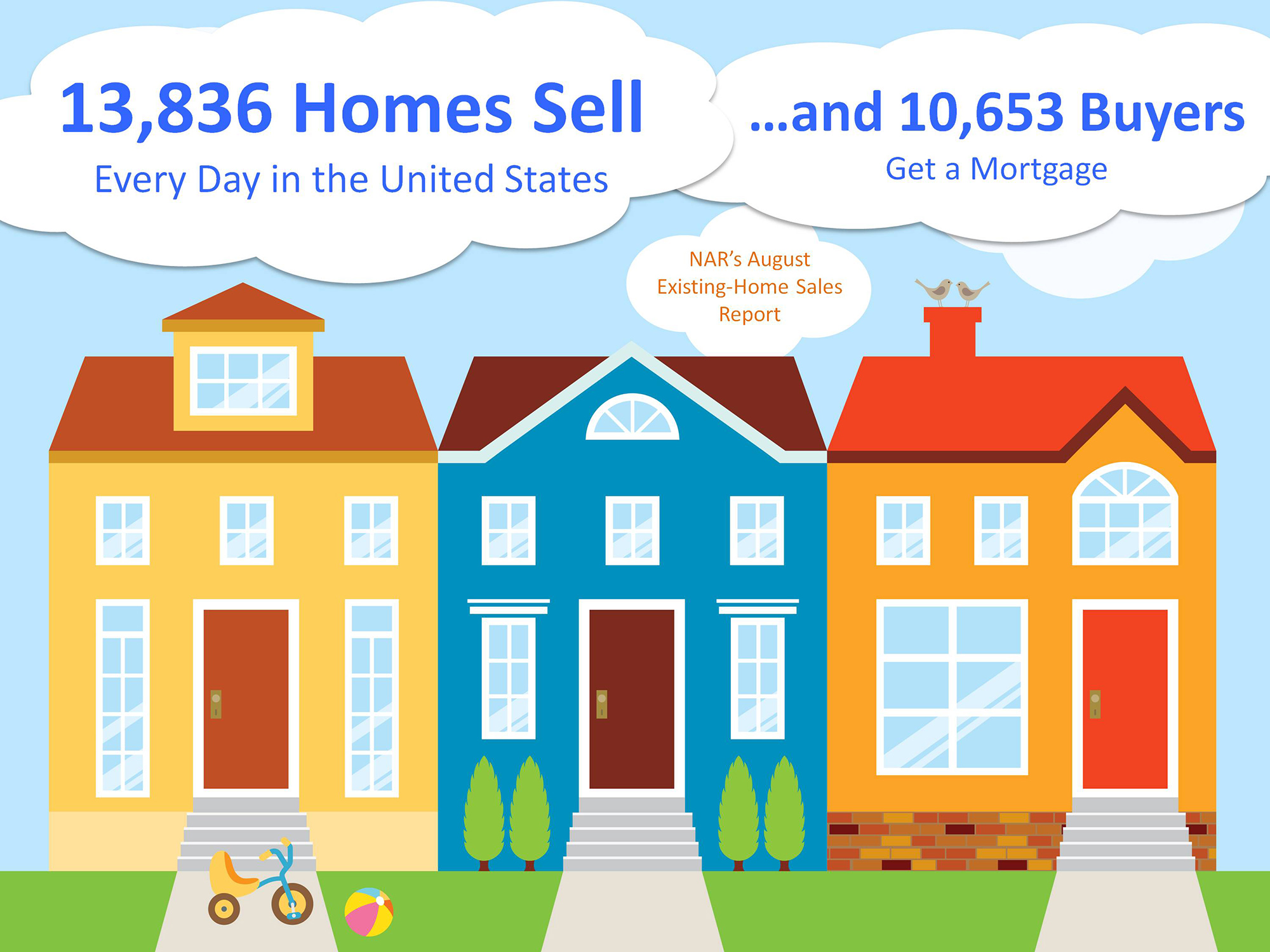
13,836 Home Sell Every Day in the United States!

13,836 Home Sell Every Day in the United States!NAR's August Existing Home Sales Report | Keeping Current Matters

Cost Across Time

Cost Across Time

Cost Across Time [INFOGRAPHIC] | Keeping Current Matters

NAR’s Existing Home Sales Report

NAR’s Existing Home Sales Report

NAR's Existing Home Sales Report [INFOGRAPHIC] | Keeping Current Matters

Finding the Right Agent is Crucial

Finding the Right Agent is Crucial

Finding the Right Agent is Crucial | Keeping Current Matters
The information delivered by your neighborhood real estate agent in the past is now available on the internet. You no longer need agents for information regarding which homes are for sale or what houses in your neighborhood sell for. You can easily find that information online. This information itself is no longer what you need from your real estate professional. However, you still need someone to deliver a thoughtful analysis of this information.
“There’s a large gap between information and actionable knowledge.”
In other words, information by itself is essentially useless.
What’s truly important is being able to understand, analyze, and use the information for the best outcome. And that’s what a real estate professional’s job has become!
What you really want is someone who can…
  • Analyze all the available information
  • Connect the dots and let you know if now is a good time to buy or the right time to sell
  • Take the time to explain your options—simply and effectively
You now need a real estate agent who truly understands the market and can help you feel confident that you are making the right decisions for you and your family.

Why You Should Sell Your House Now!

Why You Should Sell Your House Now!

Why You Should Sell Your House Now! | Keeping Current Matters
School is back in session, the holidays are right around the corner, you might not think that now is the best time to sell your house.  But with inventory below historic numbers and demand still strong, you could be missing out on a great opportunity for your family.

1. Demand is Strong

Foot traffic refers to the number of people out actually physically looking at home right now. The latest foot traffic numbers show that there are more prospective purchasers currently looking at homes than at any other time in the last twelve months which includes the latest spring buyers’ market. These buyers are ready, willing and able to buy…and are in the market right now!
As we get later into the year, many people have other things (weather, holidays, etc.) that distract them from searching for a home. Take advantage of the buyer activity currently in the market.

2. There Is Less Competition Now

Housing supply is still under the historical number of 6 months’ supply. This means that, in many markets, there are not enough homes for sale to satisfy the number of buyers in that market. This is good news for home prices. However, additional inventory is about to come to market.
There is a pent-up desire for many homeowners to move as they were unable to sell over the last few years because of a negative equity situation. Homeowners are now seeing a return to positive equity as real estate values have increased over the last two years. Many of these homes will be coming to the market in the near future.
Also, new construction of single-family homes is again beginning to increase. A recent study by Harris Poll revealed that 41% of buyers would prefer to buy a new home while only 21% prefer an existing home (38% had no preference).
The choices buyers have will continue to increase over the next few months. Don’t wait until all this other inventory of homes comes to market before you sell.

3. The Process Will Be Quicker

One of the biggest challenges of the 2014 housing market has been the length of time it takes from contract to closing. Banks are requiring more and more paperwork before approving a mortgage. Any delay in the process is always prolonged during the winter holiday season. Getting your house sold and closed before those delays begin will lend itself to a smoother transaction.

4. There Will Never Be a Better Time to Move-Up

If you are moving up to a larger, more expensive home, consider doing it now. Prices are projected to appreciate by over 19% from now to 2018. If you are moving to a higher priced home, it will wind-up costing you more in raw dollars (both in down payment and mortgage payment) if you wait. You can also lock-in your 30 year housing expense with an interest rate in the low 4’s right now. Rates are projected to be over 5% by this time next year.

5. It’s Time to Move On with Your Life

Look at the reason you decided to sell in the first place and determine whether it is worth waiting. Is money more important than being with family? Is money more important than your health? Is money more important than having the freedom to go on with your life the way you think you should?
Only you know the answers to the questions above. You have the power to take back control of the situation by putting your home on the market. Perhaps, the time has come for you and your family to move on and start living the life you desire.
That is what is truly important.

Should I Rent My House Instead of Selling It?

Should I Rent My House Instead of Selling It?

Should I Rent My House Instead of Selling It? | Keeping Current Matters
A recent study has concluded that 39% of buyers prefer to rent out their last residence rather than sell it when purchasing their next home.
The study cites that many homeowners were able to refinance and “locked in a very low mortgage rate in recent years. That low rate, combined with a strong rental market, means they can charge more in rent than they pay in mortgage each month... so they are going for it.”
This logic makes sense in some cases. Residential real estate is a great investment right now.
However, if you have no desire to actually become an educated investor in this sector, you may be headed for more trouble than you were looking for. Are you ready to be a landlord?
Before renting your home, you should answer the following questions to make sure this is the right course of action for you and your family.

10 Questions to ask BEFORE renting your home

  1. How will you respond if your tenant says they can’t afford to pay the rent this month because of more pressing obligations? (This happens most often during holiday season and back-to-school time when families with children have extra expenses).
  2. Because of the economy, many homeowners cannot make their mortgage payment. What percentage of tenants do you think cannot afford to pay their rent?
  3. Have you interviewed experienced eviction attorneys in case a challenge does arise?
  4. Have you talked to your insurance company about a possible increase in premiums as liability is greater in a non-owner occupied home?
  5. Will you allow pets? Cats? Dogs? How big a dog?
  6. How will you actually collect the rent? By mail? In person?
  7. Repairs are part of being a landlord. Who will take tenant calls when necessary repairs come up?
  8. Do you have a list of craftspeople readily available to handle these repairs?
  9. How often will you do a physical inspection of the property?
  10. Will you alert your current neighbors that you are renting the house?

Bottom Line

Again, renting out residential real estate historically is a great investment. However, it is not without its challenges. Make sure you have decided to rent the house because you want to be an investor, not because you are hoping to get a few extra dollars by postponing a sale.

New Construction = New Competition

New Construction = New Competition

New Construction = New Competition | Keeping Current Matters
For the last several years, home sellers had to compete with huge inventories of distressed properties (foreclosures and short sales). The great news is that the supply of these properties is falling like a rock in the vast majority of housing markets (only 8% of homes sold in August). Many homeowners are now thinking of selling as the impact of this substantially discounted competition has disappeared.
However, every seller of an existing residential property must realize that there is a new form of competition hitting the market: newly constructed homes.
According to the National Association of Home Builders (NAHB), new-home sales topped 500,000, in August, for the first time since 2008.
“This jump in sales activity is in line with our latest surveys, which indicate builders are seeing increased traffic and more serious buyers in the market for single-family homes,” said Kevin Kelly, chairman of the NAHB.
Broken down regionally, new home sales rose:
  • 50% in the West
  • 29.2% in the Northeast
  • 7.8% in the South
  • and were unchanged in the Midwest

Bottom Line

If you are thinking of selling, perhaps you should do it now to avoid additional competition coming to the market.

Fannie Mae Agrees: Hire a Pro to Sell Your House

Fannie Mae Agrees: Hire a Pro to Sell Your House

Fannie Mae Agrees: Hire A Pro to Sell Your House | Keeping Current Matters
Do you really need an agent to sell your house in today’s market? Here’s what Fannie Mae suggests to sellers on the Know Your Options section of their website:
“Select how you'll market and list the home (e.g., with a real estate agent or for sale by owner). There are pros and cons to each, but unless you are experienced at selling homes, it usually makes financial sense to get professional help—homes sold by agents typically sell at a higher price and spend less time on the market. An agent will also help you determine the best pricing for the house, they'll market the home, and they'll be your advocate throughout the process.”

Let’s go over the points they made:

  • Homes sold by agents typically sell at a higher price
  • Homes sold by agents typically spend less time on the market
  • An agent will help you determine the best pricing for the house
  • An agent will market the home
  • An agent will be your advocate throughout the process
If Fannie Mae says using an agent probably makes sense, perhaps you should interview an agent before putting your house up for sale.

5 Demands to Make on Your Real Estate Agent

5 Demands to Make on Your Real Estate Agent

5 Demands to Make on Your Real Estate Agent | Simplifying The Market
Are you thinking of selling your house? Are you dreading having to deal with strangers walking through the house? Are you concerned about getting the paperwork correct? Hiring a professional real estate agent can take away most of the challenges of selling. A great agent is always worth more than the commission they charge just like a great doctor or great accountant.
You want to deal with one of the best agents in your marketplace. To do this, you must be able to distinguish the average agent from the great one.
Here are the top 5 demands to make of your Real Estate Agent when selling your house:

1. Tell the truth about the price

Too many agents just take the listing at any price and then try to the ‘work the seller’ for a price correction later. Demand that the agent prove to you that they have a belief in the price they are suggesting. Make them show you their plan to sell the house at that price – TWICE! Every house in today’s market must be sold two times – first to a buyer and then to the bank.
The second sale may be more difficult than the first. The residential appraisal process has gotten tougher. A recent survey showed that there was a challenge with the appraisal on 24% of all residential real estate transactions. It has become more difficult to get the banks to agree on the contract price. A red flag should be raised if your agent is not discussing this with you at the time of the listing.

2. Understand the timetable with which your family is dealing

You will be moving your family to a new home. Whether the move revolves around the start of a new school year or the start of a new job, you will be trying to put the move to a plan.
This can be very emotionally draining. Demand from your agent an appreciation for the timetables you are setting. You agent cannot pick the exact date of your move, but they should exert any influence they can, to make it work.

3. Remove as many of the challenges as possible

It is imperative that your agent knows how to handle the challenges that will arise. An agent’s ability to negotiate is critical in this market.
Remember: If you have an agent who was weak negotiating with you on the parts of the listing contract that were most important to them and their family  (commission, length, etc.), don’t expect them to turn into Super hero when they are negotiating for you and your family with your buyer.

4. Help with the relocation

If you haven’t yet picked your new home, make sure the agent is capable and willing to help you. The coordination of the move is crucial. You don’t want to be without a roof over your head the night of the closing. Likewise, you don’t want to end up paying two housing expenses (whether it is rent or mortgage). You should, in most cases, be able to close on your current home and immediately move into your new residence.

5. Get the house SOLD!

There is a reason you are putting yourself and your family through the process of moving.
You are moving on with your life in some way. The reason is important or you wouldn’t be dealing with the headaches and challenges that come along with selling. Do not allow your agent to forget these motivations. Constantly remind them that selling the house is why you hired them. Make sure that they don’t worry about your feelings more than they worry about your family. If they discover something needs to be done to attain your goal (i.e. price correction, repair, removing clutter), insist they have the courage to inform you.

Good agents know how to deliver good news. Great agents know how to deliver tough news. In today’s market, YOU NEED A GREAT AGENT!

#1 Reason You Should Sell Now

#1 Reason You Should Sell Now

#1 Reason You Should Sell Now | Simplifying The Market
The price of any item (including residential real estate) is determined by ‘supply and demand’.  If the supply of an item is larger than the amount of people looking to purchase that item, the price will decrease.
According to the National Association of Realtors (NAR), historically there is a natural decline in buyers looking to purchase a home (also known as foot traffic) as the winter months approach. Shown in the graph below:
Foot Traffic To Decline in Winter Months | Simplifying The Market
NAR goes a step further to say that there is a direct correlation between “foot traffic” and “pending contracts/closed sales one to two months later”.

Bottom Line

The real estate market has done well to recover from the slow start we experienced due in part to the inclement weather at the beginning of 2014.  But with those winter months right around the corner, now may be the best time to get the best price.

Home Sales Hit Highest Level of the Year

Home Sales Hit Highest Level of the Year

Home Sales Hit Highest Level of the Year | Simplifying The Market
The National Association of Realtors (NAR) released their Existing Home Sales Report earlier this week. The report revealed that “sales bounced back in September to their highest annual pace of the year”. As the chart below shows, after a very slow start at the beginning of the year, residential home sales have been increasing nicely.
NAR's Existing Home Sales Report  | Simplifying The Market

14,164 Homes Sold Yesterday! Did Yours?

14,164 Homes Sold Yesterday! Did Yours?

14,164 Homes Sold Yesterday! Did Yours? | Simplifying The Market
There are some homeowners that have been waiting for months to get a price they hoped for when they originally listed their house for sale. The only thing they might want to consider is... If it hasn't sold yet this fall, maybe it's not priced properly.

After all 14,164 houses sold yesterday, 14,164 will sell today and 14,164 will sell tomorrow. 14,164!

That is the average number of homes that sell each and every day in this country according to the National Association of Realtors’ (NAR) latest Existing Home Sales Report. NAR reported that sales are at an annual rate of 5.17 million. Divide that number by 365 (days in a year) and we can see that, on average, over 14,100 homes sell every day. Sales are at the highest pace of 2014.
We realize that you want to get the fair market value for your home. However, if it hasn't sold in today's active real estate market, perhaps you should reconsider your current asking price.

5 Reasons You Shouldn’t For Sale by Owner

5 Reasons You Shouldn’t For Sale by Owner

5 Reasons You Should Not For Sale By Owner | Keeping Current Matters
Some homeowners may consider trying to sell their home on without the assistance of a real estate professional, known in the industry as a For Sale by Owner (FSBO). We think there are several reasons this might not be a good idea for the vast majority of sellers.

Here are five of our reasons

1. There Are Too Many People to Negotiate With

Here is a list of some of the people with whom you must be prepared to negotiate if you decide to FSBO.
  • The buyer who wants the best deal possible
  • The buyer’s agent who solely represents the best interest of the buyer
  • The buyer’s attorney (in some parts of the country)
  • The home inspection companies which work for the buyer and will almost always find some problems with the house
  • The appraiser if there is a question of value
  • Your bank in the case of a short sale

2. Exposure to Prospective Purchasers

Recent studies have shown that 92% of buyers search online for a home. That is in comparison to only 28% looking at print newspaper ads. Most real estate agents have an extensive internet strategy to promote the sale of your home. Do you?

3.  Actual Results also come from the Internet

Where do buyers find the home they actually purchased?
  • 43% on the internet
  • 9% from a yard sign
  • 1% from newspapers
The days of selling your house by just putting up a sign and putting it in the paper are long gone. Having a strong internet strategy is crucial.

4. FSBOing has Become More and More Difficult

The paperwork involved in selling and buying a home has increased dramatically as industry disclosures and regulations have become mandatory. This is one of the reasons that the percentage of people FSBOing has dropped from 19% to 9% over the last 20+ years. 

5. You Net More Money when Using an Agent

Many homeowners believe that they will save the real estate commission by selling on their own. Realize that the main reason buyers look at FSBOs is because they also believe they can save the real commission. The seller and buyer can’t both save the same commission.
Studies have shown that the typical house sold by the homeowner sells for $184,000 while the typical house sold by an agent sells for $230,000.   This doesn’t mean that an agent can get $46,000 more for your home as studies have shown that people are more likely to FSBO in markets with lower price points. However, it does show that selling on your own might not make sense.

Bottom Line

Before you decide to take on the challenges of selling your house on your own, sit with a real estate professional in your marketplace and see what they have to offer.